Music video production in Lebanon runs on a shorter chain than most people assume: a treatment, one or two shoot days, and an edit that is usually longer than both. The variable that decides quality is not the camera or the budget headline. It is how much of the song was worked out on paper before anyone arrived on set.
Good music video production in Lebanon is therefore mostly decided before the shoot date. An artist who turns up with a track, a location and no shot list will get a video. It will simply be a more expensive and less interesting one than the same day with a plan.
What are the stages of a music video production?
Five, and skipping any of them shows up in the final cut. A treatment fixes the idea in writing. Pre-production turns that into a schedule, a location list and a shot list. The shoot executes it. The edit assembles it to the track. The grade and delivery finish it.
The treatment is the cheapest place to make changes and the one artists most often skip. Rewriting a concept on paper costs an afternoon; discovering on set that the chorus has nowhere to go costs a day of crew time.
Pre-production is where the song gets broken down bar by bar. Most videos are cut to structure rather than to lyrics, so the editor needs to know which sections repeat and where the energy changes. That breakdown also tells you how many setups the day actually needs, which is the real driver of cost.
Delivery is not an afterthought either. Where a video is published, the page describing it should be machine-readable. Schema.org’s VideoObject type expects properties including name, description, contentUrl, embedUrl, duration, uploadDate, thumbnailUrl and transcript. A release uploaded with a bare filename is harder for anyone to find later.
How long does a music video take to shoot?
One day covers a single-location performance video with two or three setups. Two days are needed once there is a narrative thread, a costume change or a second location. Anything promising five locations in one day is promising travel time, not coverage.
The useful planning number is setups, not hours. A setup is one camera position with its lighting, and a realistic day is somewhere between eight and fourteen of them depending on how much relighting each needs. Count the setups the treatment implies and the schedule writes itself.
Performance coverage also needs more repetitions than artists expect. The same chorus is usually shot several times from different positions so the edit can cut on the beat, which means miming the track accurately each time. That is tiring, and it is why the vocal-heavy sections are scheduled early.
Where the finished piece will be posted also caps its length. TikTok’s developer documentation states that the maximum post duration is not a fixed number but is returned per creator, and that clients must check the max_video_post_duration_sec value before posting. Knowing the ceiling before the shoot is what stops a four-minute edit being cut to fit at the last minute.
What technical specifications should the final file meet?
This is the part where otherwise good videos lose quality, because the export settings are chosen at midnight by whoever is closest to the keyboard.
YouTube publishes exact targets. Its recommended upload encoding settings specify an MP4 container with the moov atom at the front, H.264 High Profile with progressive scan, AAC-LC audio at a 48 kHz sample rate, and a recommended 384 kbps for stereo. Video bitrates are given per resolution: 8 Mbps for 1080p at 24, 25 or 30 frames per second, 12 Mbps at 48, 50 or 60, and 35 to 45 Mbps for 2160p. It also names BT.709 as the recommended colour space for standard dynamic range uploads.
That colour reference is a real standard rather than a convention. Recommendation ITU-R BT.709, "Parameter values for the HDTV standards for production and international programme exchange", is at version BT.709-6 and has been in force since June 2015. Grading to it is what keeps a video looking the same on a phone, a laptop and a television.
Shoot frame rate should match the intended delivery. YouTube asks for content to be encoded and uploaded at the frame rate it was recorded at, and lists 24, 25, 30, 48, 50 and 60 as common. Deciding this before the shoot avoids a conversion that costs sharpness.
How do vertical cutdowns change the shoot?
Almost every release now needs vertical versions, and the cheapest time to get them is while the set is still standing. Cropping a 16:9 master to vertical afterwards throws away most of the frame and usually puts the artist’s head at the top edge.
The practical fix is framing with both in mind: shoot wide enough that a centre crop survives, and mark the vertical safe area on the monitor. Where budget allows, a second camera running vertical is better than any crop.
Platform rules affect the edit as well as the frame. TikTok’s own developer documentation notes that the maximum post duration is not fixed but returned per creator, and that clients must check the max_video_post_duration_sec value from its creator info endpoint before posting. It also notes creator accounts are typically limited to around 15 posts per day through direct posting. Planning a rollout of twenty clips in one afternoon runs into that.
Music video production in Lebanon: locations and permissions
Location is where local knowledge saves the most money. A rooftop with a city view, a mountain road, a disused industrial space and a studio cyclorama are all within reach of Beirut, and each carries a different permission and logistics cost.
Ask three questions about any location before committing: who grants permission, what the power situation is, and what happens if the weather changes. The third is the one that catches outdoor shoots, because a treatment built around daylight has no fallback when the day is flat.
A controlled space removes most of those variables, which is why so many performance videos are shot against a studio wall and lit rather than hunted outdoors. The trade-off between control and character is the same one covered in studio or on location.
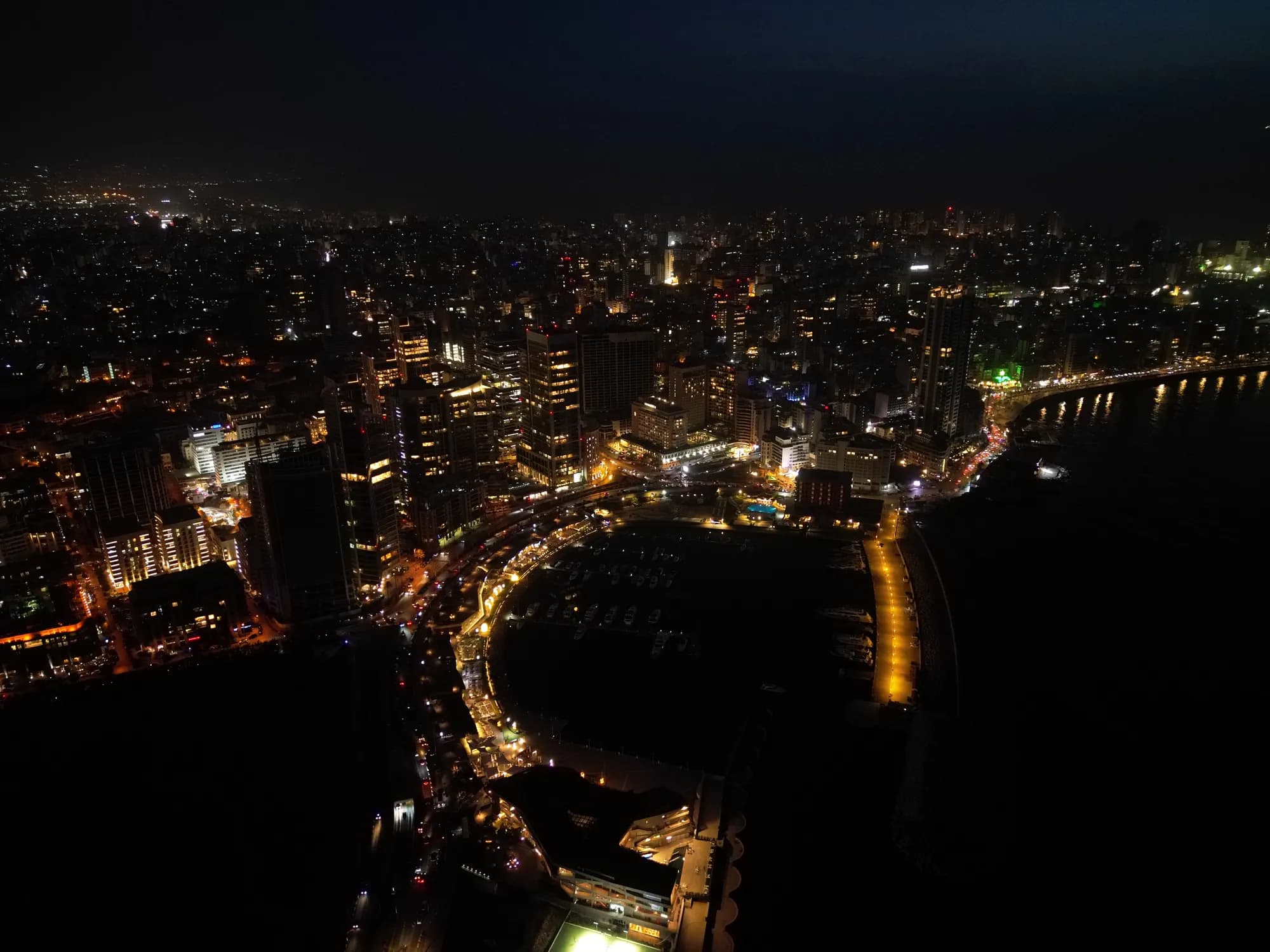
Aerial sequences deserve the same advance treatment as any other setup rather than being added at the end of a day, for the reasons set out in shooting the Beirut coast by drone.
Past work is in the music video portfolio, with production described on the videography service page and stills coverage under photography. Controlled sets are at our Dekwaneh studio, short-form cutdowns relate closely to our social media ads work, the full list is on the services overview, more categories sit in the portfolio, and you can send us the track when there is one to hear.
If clips from the shoot are going to a business profile rather than a music platform, the limits are tighter again: Google accepts profile video up to 30 seconds long, up to 75 MB, at 720p or higher. That is a separate export, planned rather than improvised.
Frequently asked questions
How much does music video production in Lebanon cost?
It scales with shoot days, crew size and the number of setups rather than with the camera. The honest way to get a figure is to send the track and the treatment, because a one-location performance piece and a two-day narrative shoot are different productions. We quote per project rather than from a price list.
Does the artist need to mime the whole song?
Usually yes, several times. The edit cuts between angles on the beat, so each angle needs a take that runs long enough to cut from. Miming accurately at full energy is the single most tiring part of the day, which is why those takes are scheduled before the artist is worn out.
Should the video be shot in 4K?
If there is any chance of reframing, cropping to vertical or re-editing later, yes. The cost is storage and edit time rather than shoot time. If the release is purely a 1080p upload with no cutdowns, a well-encoded 1080p master is sufficient.
Who owns the footage that is not used?
Agree it in writing before the shoot. The usual question is whether the artist or label can use outtakes for social content, and whether the production company can show the work in its own portfolio. Both answers are reasonable; leaving them unwritten is what causes trouble.
Sources
- YouTube Help: Recommended upload encoding settings
- ITU: Recommendation ITU-R BT.709, Parameter values for the HDTV standards for production and international programme exchange
- Schema.org: VideoObject
- TikTok for Developers: Content Sharing Guidelines
- Google Business Profile Help: Add photos or videos to your Business Profile