Real estate photography in Lebanon has a single job: persuade a serious buyer to ask for a viewing. That outcome depends far less on the camera than on three decisions taken before anyone arrives: whether the property has actually been prepared, which hour of the day the main rooms face their best light, and whether the finished files are delivered in a form the listing portal will not ruin.
An agent who books a photographer for Tuesday at noon because that is when the keys are free has already decided how the photographs will look.
What makes a property photograph work?
A good listing photograph does two things at once: it shows the shape of a room honestly, and it gives the eye somewhere to rest. Wide-angle distortion that makes a small bedroom look like a hall fails the first test, and buyers notice the discrepancy the moment they walk in. The viewing is wasted and the agent’s credibility goes with it.
The practical craft is mostly about verticals and height. Walls should be vertical rather than leaning, which means a level camera. Camera height sits around chest level for living spaces, lower for rooms where the floor is the selling point. These are unglamorous decisions, and they are what separate a listing set from holiday snaps.
Image quality is not a stylistic preference here either. Google states plainly that high-quality photos appeal to users more than blurry, unclear images, and that sharp images also look better as search thumbnails. It further advises using high resolution where possible and avoiding extreme aspect ratios, which is a direct argument against the ultra-wide panoramic crops some portals encourage.
When should a property be photographed?
The answer is set by the windows, not by the diary. A living room facing west photographs best in the late afternoon; the same room at nine in the morning is flat and blue. A north-facing apartment has soft, even light most of the day and is the easiest of all to schedule.
Ask which direction the main rooms face before fixing a time. If the property has a terrace, a sea view or a balcony that is part of the sale, the shoot should be planned around that view rather than around the interior, because the interior can be lit and the view cannot.
Light quality is also the one thing platforms judge directly. Google’s Business Profile rules ask simply that photos be in focus and well lit, with no significant alterations or excessive filters, alongside hard limits of 10 KB to 5 MB and a recommended 720 px by 720 px. A property photographed at the wrong hour fails the first test before any of the technical ones.
Twilight exteriors are the one genuine exception worth paying for. The window of usable dusk light is short, perhaps twenty to thirty minutes, and it only works if the interior lights are on and the photographer is already set up when it arrives. Booked as an afterthought at the end of a daytime shoot, it is almost always missed.
How many images does a property listing need?
Enough to answer the questions a buyer would otherwise have to book a viewing to resolve, and no more. For a two-bedroom apartment that is usually somewhere between twelve and twenty frames: each room once, the kitchen and bathroom properly, the view, the building approach, and one image that establishes how the rooms connect.
What buyers consistently miss is the layout. A set of beautiful individual rooms with no sense of how they join leaves people unable to picture the property at all. One wide frame from a doorway showing two spaces at once does more work than three more cushions.
Resist padding. Eight photographs of the same reception room from slightly different angles reads as a property with one good room.
There is a file-weight argument too. Because doubling resolution quadruples the pixel count, every surplus frame is paid for twice: once in the buyer’s patience and once in how quickly the listing renders on a phone.
How should listing photographs be delivered?
Delivery is where good photography is quietly undone. A portal that compresses a 12 MB JPEG to fit its own limit will do so with no regard for the parts of the image you cared about, so it is better to control that export yourself.
Google’s web.dev guidance is useful here because it is specific about trade-offs: it recommends WebP or AVIF where possible because they generally provide better compression than older formats, with JPEG or PNG as a fallback, and advises trying several JPEG quality levels to find the best quality-versus-size trade-off for each asset. It also notes the arithmetic of high-resolution screens: a 100 by 100 CSS-pixel image is roughly 40,000 bytes uncompressed at 1x, 160,000 at 2x and 360,000 at 3x. Resolution is not free.
In practice, ask the photographer for two sets: full-resolution masters for print and archive, and a web set sized for the portal. One set cannot do both jobs well.
How do listing photographs get found?
A property listing is a page, and its images are findable or not depending on how they are described. Google advises short, descriptive filenames over generic ones, calls alt text the most important attribute for describing an image, and recommends placing images near relevant text on a page that matches the image’s subject.
Where a site can support it, images can also be described in structured data. Schema.org’s ImageObject type expects properties such as contentUrl, caption, width, height, encodingFormat and representativeOfPage, the last of which marks the one image that stands for the page. Google also notes that it does not index CSS background images, so a hero shot loaded purely as a background is invisible to it.
Real estate photography in Lebanon: preparing the property
Preparation changes results more than any equipment decision, and it is almost entirely free. The property should be cleaned and decluttered before the photographer arrives, not during the shoot, because a photographer tidying a kitchen is being paid to do the wrong job.
A short checklist covers most of it. Clear worktops and bathroom surfaces completely. Open blinds and curtains fully. Replace any dead bulbs, and make sure the bulbs in one room match each other, since mixed colour temperatures are visible in a photograph even when the eye forgives them. Remove cars from the driveway and bins from the frontage. Hide the pet bowls.
Name the files sensibly as well, because they often travel further than the listing. Google advises short, descriptive filenames and explicitly warns against generic filenames like image1.jpg, pic.gif or 1.jpg, which is exactly what a camera produces by default.
For occupied properties, agree in advance who is responsible for this. The most common cause of a weak set is a photographer arriving to find a lived-in home and only an hour booked.
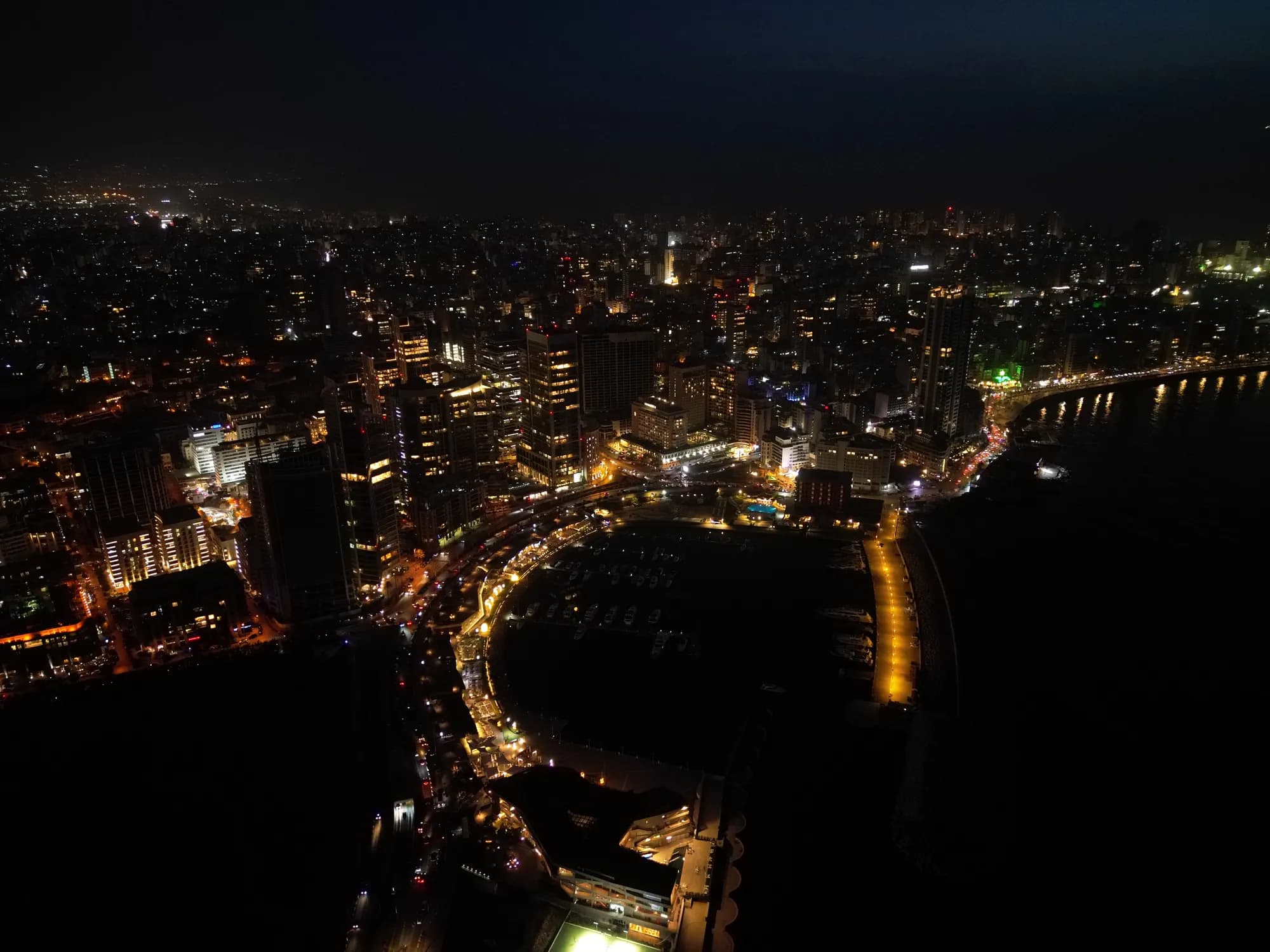
You can see how we approach interiors and exteriors in the real estate portfolio, and what a session includes on the photography service page. Developments that warrant a walkthrough film are covered under videography, and coastal or elevated properties often benefit from the aerial approach described in shooting the Beirut coast by drone. Interiors shot under controlled light are discussed in studio or on location, our full range is on the services overview, other work sits in the portfolio, background is on the about page, and you can send us the property details directly.
Frequently asked questions
How long does a real estate photography shoot in Lebanon take?
For a standard apartment, one to two hours of shooting once the property is ready. A villa with grounds, or any property needing a twilight exterior, runs longer because it has to span more than one light condition. Preparation time is separate and should not come out of the booked hours.
Is a drone necessary for real estate photography in Lebanon?
Only when the setting is part of the value: a sea view, a plot boundary, a rooftop, or a building whose position cannot be shown from the ground. For an apartment on the third floor of a city block it adds cost and little else, and it depends on wind and permission on the day.
Should empty properties be virtually staged?
Staging helps buyers judge scale in a bare room, but it has to be declared. An image presented as a photograph of a furnished property that is actually empty invites exactly the credibility problem good photography is meant to avoid. Label staged images clearly.
Who owns the listing photographs?
Agree this in writing before the shoot, because it causes more disputes than anything else in property work. The usual question is whether the images may be reused if the property is relisted with another agent, or by the owner after a sale falls through. Neither answer is wrong; an unwritten one is.