Wedding videography in Lebanon is usually built around two deliverables: a short highlight film of roughly three to six minutes, and a longer edit that plays the ceremony and the speeches closer to real time. What separates a film you rewatch from one you open once is rarely the camera. It is the number of locations the day has to cross, whether the ceremony audio was recorded on its own device, and how much of the celebration happens after the sun goes down.
Most couples book the photographer first and treat the film as an add-on. That order is worth questioning, because the two jobs compete for the same minutes of your day, and the film is the one that carries sound.
What is the difference between wedding photography and wedding videography?
A photographer freezes a moment; a videographer has to capture the seconds either side of it, with usable audio. That difference changes almost everything about how the day is run. A photographer can work a room quietly and reposition between shots. A film crew needs the vow exchange to stay audible, which means microphones placed before the ceremony starts and left alone.
The practical consequence is that the two teams need one shared timeline rather than two. If the first look is scheduled for the same ten minutes the crew needs to mic the groom, something gets lost, and it is almost always the audio. Our note on how to plan your wedding photography timeline covers the ordering in detail, and the same timeline should carry the video crew.
The second difference is delivery. A photograph is finished when it is exported. A film still has to survive compression on whatever platform you share it on. Google publishes exact recommended upload encoding settings for YouTube, and they are specific: an MP4 container with the moov atom at the front, H.264 High Profile, and a recommended bitrate of 8 Mbps for 1080p at 24, 25 or 30 frames per second, rising to 35 to 45 Mbps for 2160p. A film grade that looks correct on a laptop can fall apart if it is exported far below those numbers.
How long should a wedding film be?
Two lengths serve two different purposes, and trying to make one file do both is the most common regret. The highlight film is the one that gets shared, so it is cut tight and scored. The documentary edit is the one the family watches years later, and it is valuable precisely because it is unhurried.
Ask for both in writing before the day. A highlight film assembled from footage shot without the longer edit in mind will usually be missing the parts you later want: the full vows, the whole of a parent’s speech, the quiet twenty seconds before the doors open. Those are cheap to record and impossible to recreate.
Length also interacts with where the film will live. A Google Business Profile, for example, accepts video only up to 30 seconds long, up to 75 MB, at 720p or higher, so a venue or planner sharing a clip to their profile needs a short cut made for that slot rather than a trimmed highlight film.
If budget forces a choice, keep the ceremony and the speeches complete and shorten the highlight. Coverage you did not record cannot be edited back in.
Why does ceremony audio matter more than the camera?
Audio is the only part of a wedding film that cannot be fixed afterwards. A slightly soft shot is still watchable. Vows recorded from twenty metres away, over a PA system and an air conditioner, are not, and no amount of editing recovers them.
This is why a serious crew records the ceremony on more than one device: a transmitter on the officiant or groom, a feed from the venue’s own desk where one exists, and an ambient recorder for the room. The redundancy is the point. One device failing on the day is normal; three failing is not.
Audio specifications are worth knowing when you compare quotes. YouTube’s published encoding guidance asks for AAC-LC at a 48 kHz sample rate and recommends 384 kbps for stereo, which is a useful floor to hold a delivered film to.
The same logic applies to the speeches. A handheld microphone passed between speakers is unreliable, because people hold it at whatever distance feels natural to them and that distance changes every sentence. A fixed recorder near the top table captures a usable track regardless.
How does light shape a wedding film?
Film is less forgiving of mixed light than stills are. A room lit by warm tungsten uplighters, cool daylight through a window and a dance floor of saturated LEDs gives the colourist three different colour temperatures in one frame, and the skin tones pay for it.
Broadcast and production work handles this by grading to a defined standard. The relevant one is Recommendation ITU-R BT.709, titled "Parameter values for the HDTV standards for production and international programme exchange", currently at version BT.709-6 and in force since June 2015. It is the colour space most delivery platforms assume, and YouTube’s own documentation names BT.709 as the recommended standard for uploads. Grading to a known target is what keeps a film looking the same on a phone, a laptop and a television.
Practically, the decision you control is scheduling. Portraits in the last hour before sunset need almost no correction. The same portraits at midday, under a hard overhead sun, cost the crew time and still look harder. If the venue is coastal, that last hour is worth protecting in the timeline even at the cost of moving dinner later.
What should you ask a wedding videography team before booking?
Five questions separate a clear booking from a disappointing one, and none of them is about equipment. They are the same five whether you are hiring wedding videography in Lebanon for a mountain venue or a city ballroom.
- How many people will actually be filming on the day, and what happens if one is ill?
- Is the ceremony audio recorded on an independent device, or taken from the camera?
- What exactly is delivered, at what resolution, and in what format?
- How long after the wedding are the files delivered, and how long are they kept?
- Who owns the footage that was shot but not used?
The delivery question matters more than couples expect. If a film is being published anywhere public, the page it sits on should describe it in a way search engines can read. Schema.org defines a VideoObject type for exactly this, with expected properties including name, description, contentUrl, embedUrl, duration, uploadDate, thumbnailUrl and transcript. A film delivered as a bare file, with no title and no description, is harder for anyone to find later, including you.
Planning wedding videography in Lebanon around the venue
Venues here vary more than the brochures suggest. A mountain venue with a long outdoor ceremony, a city hotel ballroom with no natural light, and a coastal terrace are three genuinely different filming problems, and the crew size that suits one is wrong for another.
A single indoor ceremony room with fixed seating can be covered well by two operators. A wedding that moves between a church, a separate reception venue and a late beach segment needs either a larger team or an honest conversation about what will not be filmed. Asking a two-person crew to cover three locations means travel time comes out of coverage time.
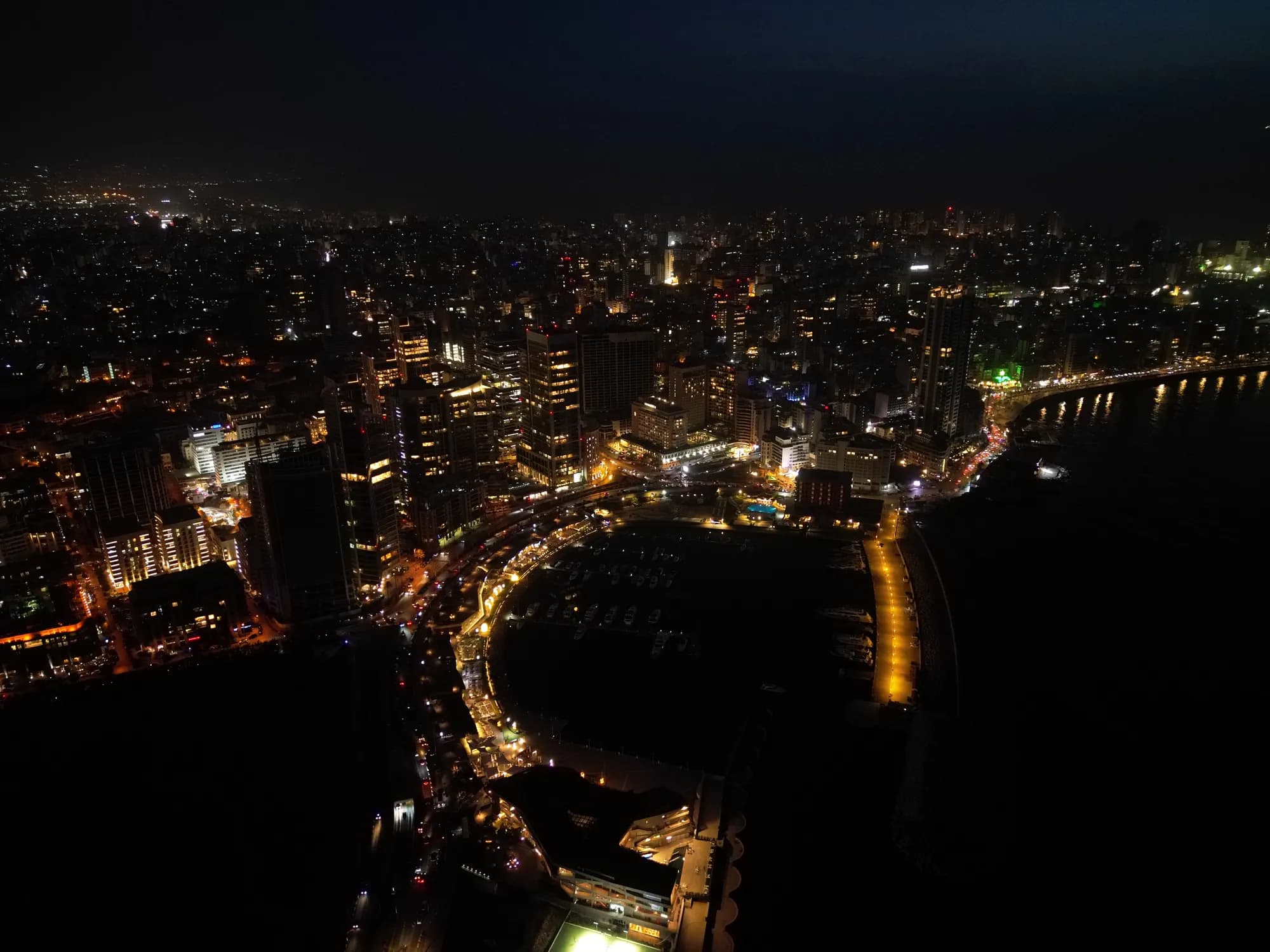
If the day includes an aerial sequence, treat it as its own scheduled item rather than something squeezed in. We wrote about the conditions that actually make coastal aerial work viable in shooting the Beirut coast by drone, and most of it applies to wedding days too: wind and light decide the window, not the schedule.
Wherever the film ends up published, the still frame that represents it matters too. Google asks for high-quality photos rather than blurry, unclear images and calls alt text "the most important attribute" for describing one, which is as true of a film’s thumbnail as of a photograph.
You can see how these pieces come together across our wedding portfolio, and the production side is described on the videography service page. Couples planning portraits indoors may also want to read studio or on location, which covers the same controlled-light trade-off. Stills coverage is set out under photography, indoor sessions under our Dekwaneh studio, and the full range on the services overview. Receptions that run like a production of their own are closer to our events work. If you would like us to look at a specific date and venue, talk to us.
Frequently asked questions
How far in advance should wedding videography in Lebanon be booked?
For a date in the main season, several months is normal, simply because good crews hold one wedding per day. The more useful question is how early the timeline is agreed. Booking a team a year out but agreeing the running order the week before gives you the same problems as a late booking.
Do we need both a photographer and a videographer?
They are not substitutes. Stills are what get printed and hung; film is what carries voices. If you only want one, choose based on which you expect to return to. If you want both, book them together so they plan around one timeline rather than competing for the same minutes.
Can a wedding film be shot without a drone?
Yes, and in many venues it should be. Aerial footage adds scale to a wide coastal or mountain setting, and adds very little inside a ballroom. It also depends on wind, light and permission on the day, so it belongs in the plan as optional rather than guaranteed.
What resolution should the final film be delivered in?
1080p is still the practical baseline for sharing, and 4K is worth it when the footage may be re-edited or shown large. Ask for the delivery bitrate as well as the resolution: a 4K file exported far below YouTube’s recommended 35 to 45 Mbps can look worse than a well-encoded 1080p one.
Sources
- YouTube Help: Recommended upload encoding settings
- ITU: Recommendation ITU-R BT.709, Parameter values for the HDTV standards for production and international programme exchange
- Schema.org: VideoObject
- Google Business Profile Help: Add photos or videos to your Business Profile
- Google Search Central: Google Images best practices